“In every walk with nature one receives far more than he seeks.” ~John Muir
Delaware is a tiny state on the east coast of the United States. Nestled next to Maryland, just below Pennsylvania, and New Jersey, Delaware also borders the Atlantic Ocean.
This story is about the incredible journey of the Atlantic horseshoe crab.
Delaware Aware
There is a lot going on for this little state with big history. It was the first state in our nation. Since 1638, Delaware remains rich in culture and history. Delaware was the first to ratify the U.S. Constitution and thus became known as the “First State.” Before that, there was a strong indigenous population, but even before that, there has always been the horseshoe crab.
The Ancient Horseshoe Crab
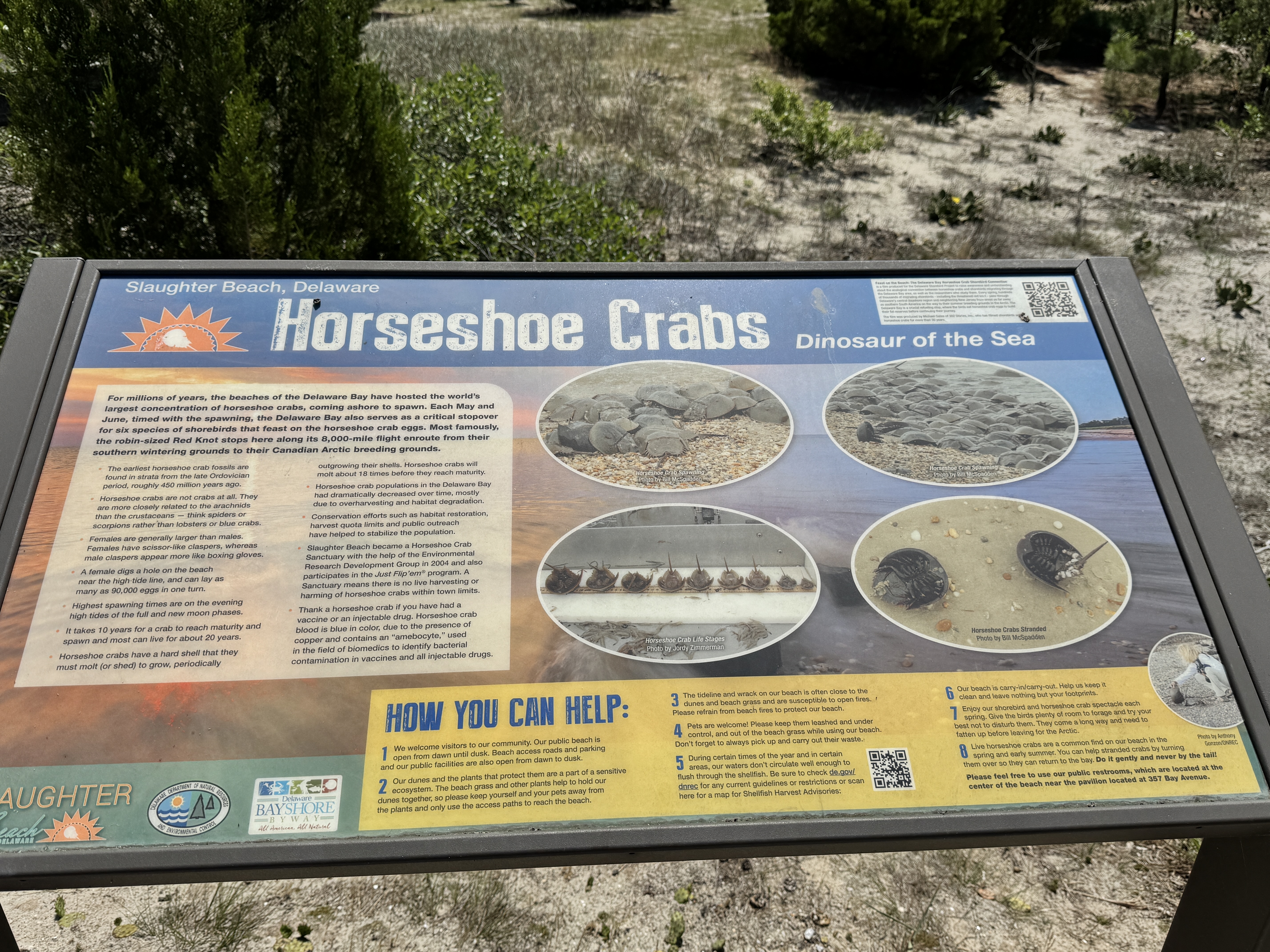
The horseshoe crab (Limulus polyphemus), is the oldest living fossil in Delaware and Maryland. These valuable marine invertebrates evolved much earlier than humans and even before the Delaware Chesapeake Bays. In fact, horseshoe crabs have been around well over 400 million years, predating dinosaurs. They evolved in the shallow seas of the Paleozoic Era. Along with other primitive arthropods.
Dancing in the Moonlight
In late spring and early summer, thousands of horseshoe crab come ashore in the Delaware Bay. Specifically, at high tide during the full and new moon, the horseshoe crabs spawn. The female crabs lay thousands of eggs in the sand while the males do their part.
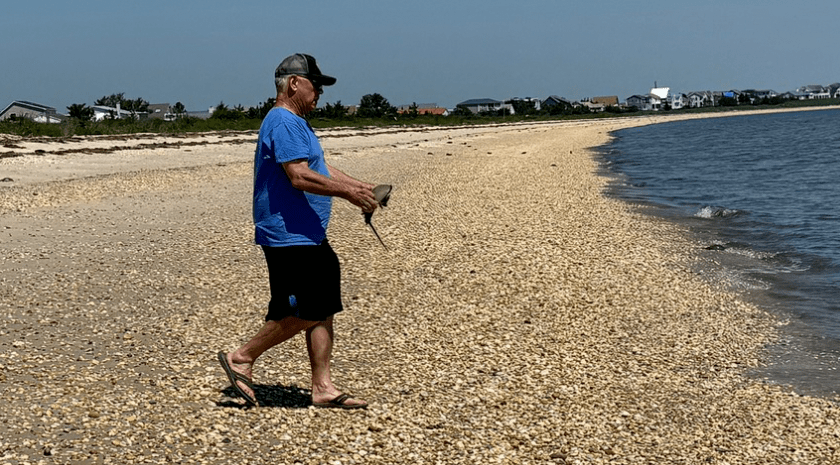
During the moon dance, many horseshoe crabs are stranded belly-up making them fair game for birds and turtles. Luckily there is a program called “Just flip’em”! We were flipping ready!
Flipping Crabs
The most fun one can have while saving a creature of nature! Horseshoe crabs “Just flip “em!®”, program helps reduce large number of horseshoe crabs that die when they become stuck upside-down on the beach. The Ecological Research & Development Group (ERDG), founded in 1995, is a non-profit wildlife conservation organization. The primary focus is to overcome things that inhibits the conservation of the world’s horseshoe crab species.
The Just flip ’em!™ program is designed to bring attention to the hundreds of thousands of horseshoe crabs (Limulus polyphemus) that die each year from being stuck upside down during their yearly spawning ritual. The program encourages individuals to take the time to assist and appreciate these remarkable creatures.
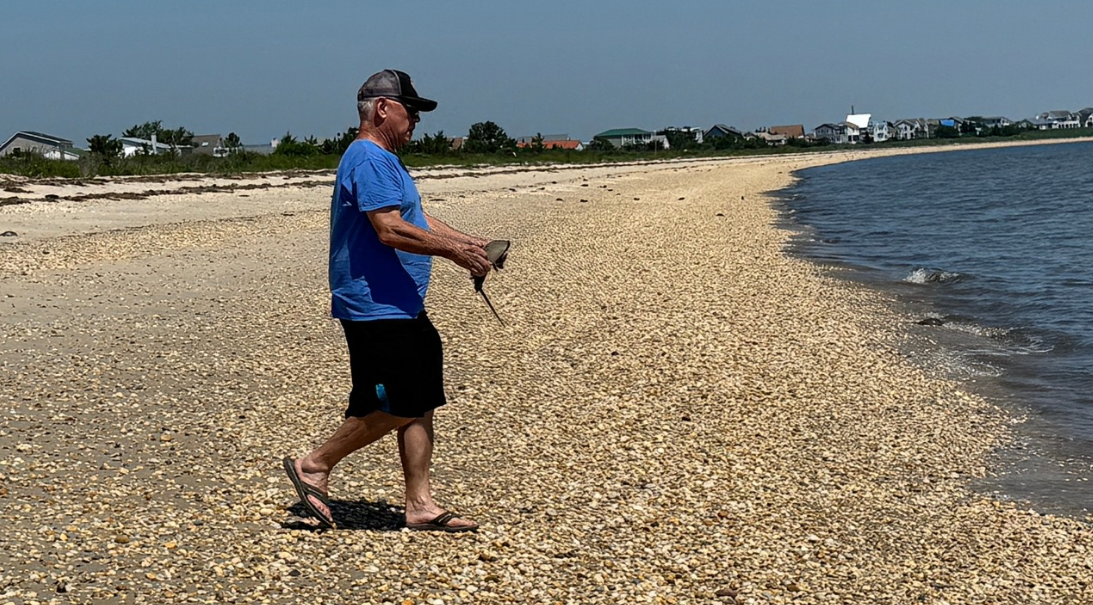
IMPORTANT NOTE: It’s important not to flip them by their tail. Even though it looks scary, the tail is delicate and can be easily damaged. The best way to turn them over is by the edge of their shell. Horseshoe crabs do not bite or sting. If they seem a bit lifeless, tap the shell, if they move help them get to the water.
Original Blue Bloods
But wait, there is more. The Horseshoe Crab has blue blood! Due to the presence of a copper-based respiratory pigment called hemocyanin, the horseshoe crabs blood is a bright blue. In the 1960’s, two scientists discovered the blood has the ability to detect endotoxins or dangerous bacteria. The horseshoe crabs blood gels or clots when it makes contact with bacteria. The blue blood of horseshoe crabs is used to determine the virility of vaccines and medical devices.
Watch Them Glow
And the horseshoe crab shell is luminescent under UV light. Like scorpions, the horseshoe crab have a hyaline layer on their shell. This layer makes them sensitive to light and glow under a black light.
The horseshoe crab has complex visual systems that includes ten eyes. They can see at night as well as during the day. The eyes on the shell recognize UV rays from the sun and reflect light from the moon. Studies show the eyes of the horseshoe crab have been instrumental in studying and understanding the human eye development.
Humbled
The horseshoe crab has performed this annual moon dance for many millennia. We felt privileged to be part of this incredible journey of existence in this moment in time. As the universe reveals connections, this pic came from our son who rented a U-Haul the same day and this was on it:
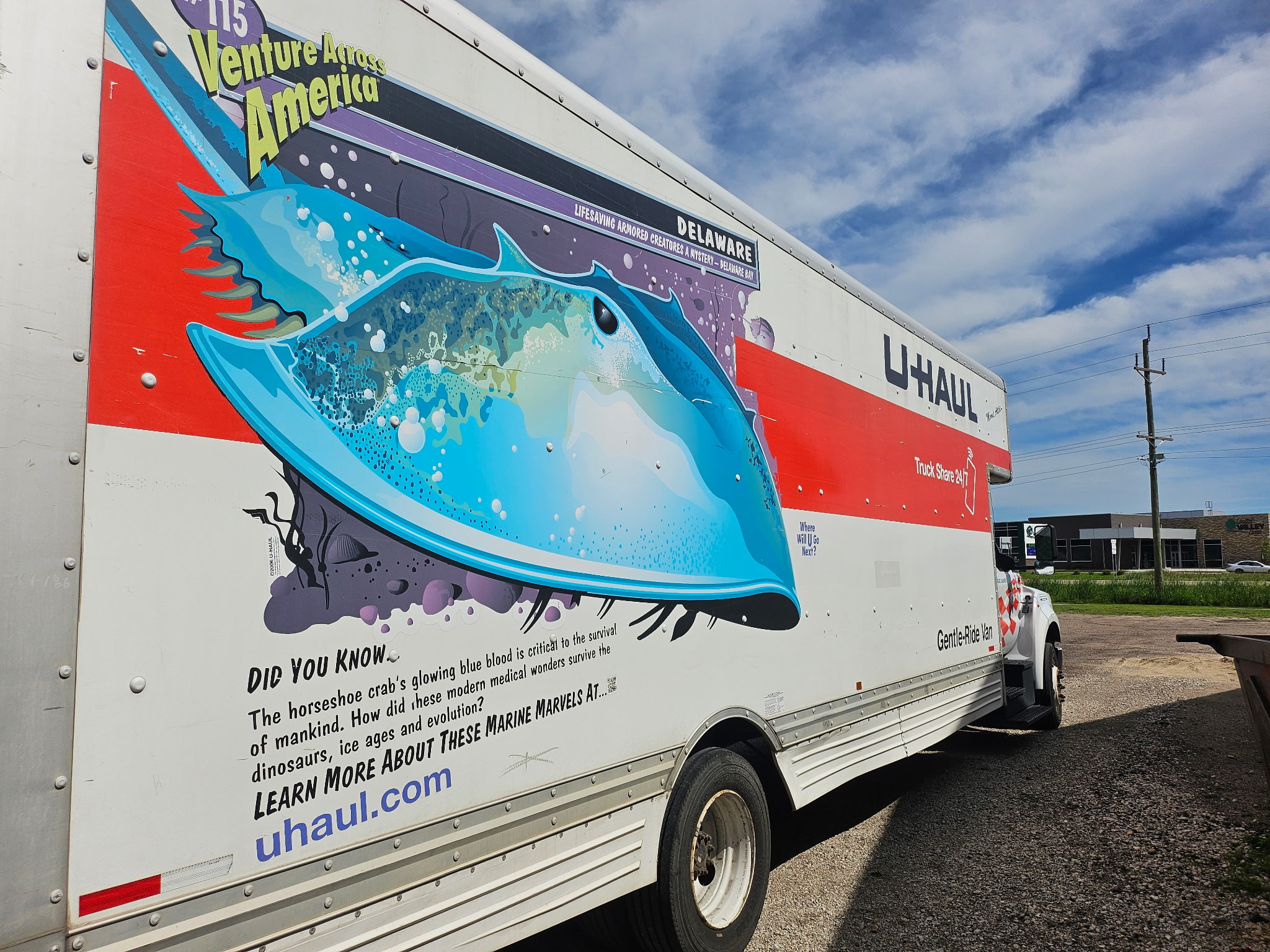
Nature has a way of humbling and connecting us.
The Humbleweeds – Eric and Lori
 HUMBLEWEEDS
You must be logged in to post a comment.